Music and Choir
Nurturing confident minds and creative souls through the power of music
Awakening the mind and soul through the power of music
From the pivotal “nine-year change” in third grade through the advanced ensembles of high school, music in Waldorf education serves as a profound catalyst for a child’s intellectual, emotional, and social development.
Grounded in the philosophy that the human being is inherently musical, the curriculum holistically engages the “head, heart, and hands” to unify thinking, feeling, and intentional action. In third grade, as children cross a critical developmental threshold of self-awareness, they transition from pentatonic flutes to diatonic recorders and begin a stringed instrument.
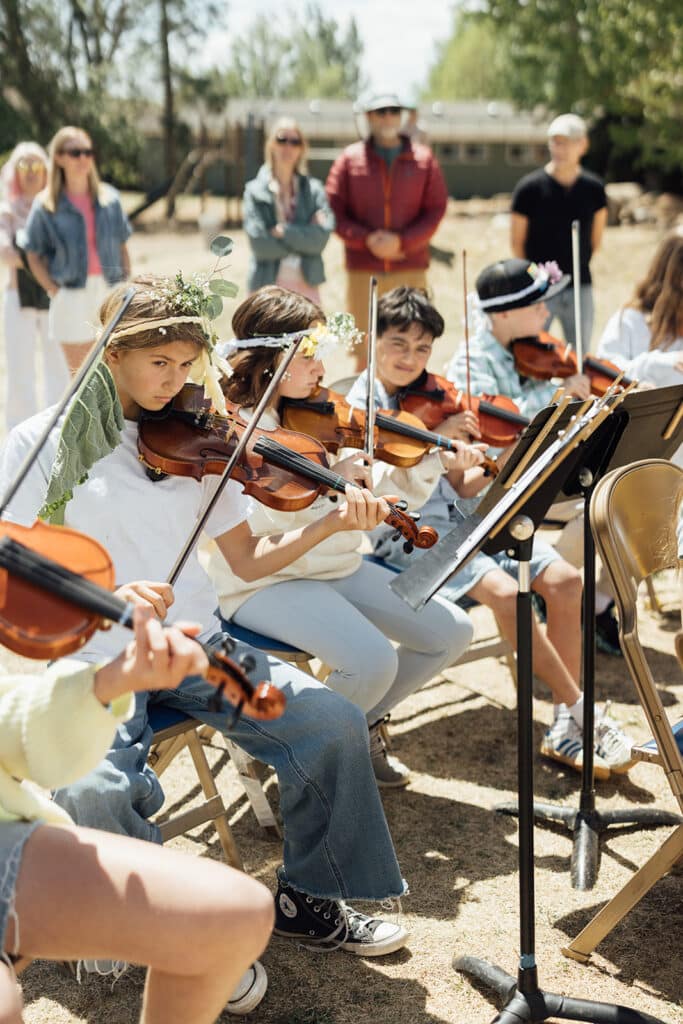
Playing strings requires the physical crossing of body midlines and precise physical placement guided entirely by active listening—skills that build immense perseverance and resonate with the child’s expanding emotional core.
As students advance into middle and high school, this individual discipline transforms into a collective responsibility through multi-part choirs and full orchestras.
By constantly balancing their own performance with the harmony of the group, Waldorf students don’t just learn to read music; they master the delicate interplay of leadership, community, and deep, empathetic listening.
Why music matters
Decades of neurological and academic research confirm that music is a foundational catalyst for a child’s intellectual, academic, and emotional growth.
- Accelerated Language & Reading: Early musical training fast-tracks brain development in areas responsible for speech, language acquisition, and literacy.
- The “Full-Brain” Workout: Playing an instrument engages all brain networks simultaneously, building a stronger bridge between hemispheres to boost memory and problem-solving.
- Proven Academic Growth: Students in high-quality music programs average 17% higher in math and 19% higher in English scores than their peers.
- Social & Emotional Harmony: Group music-making releases oxytocin and dopamine, which naturally lowers stress while building deep empathy, trust, and collaboration skills.
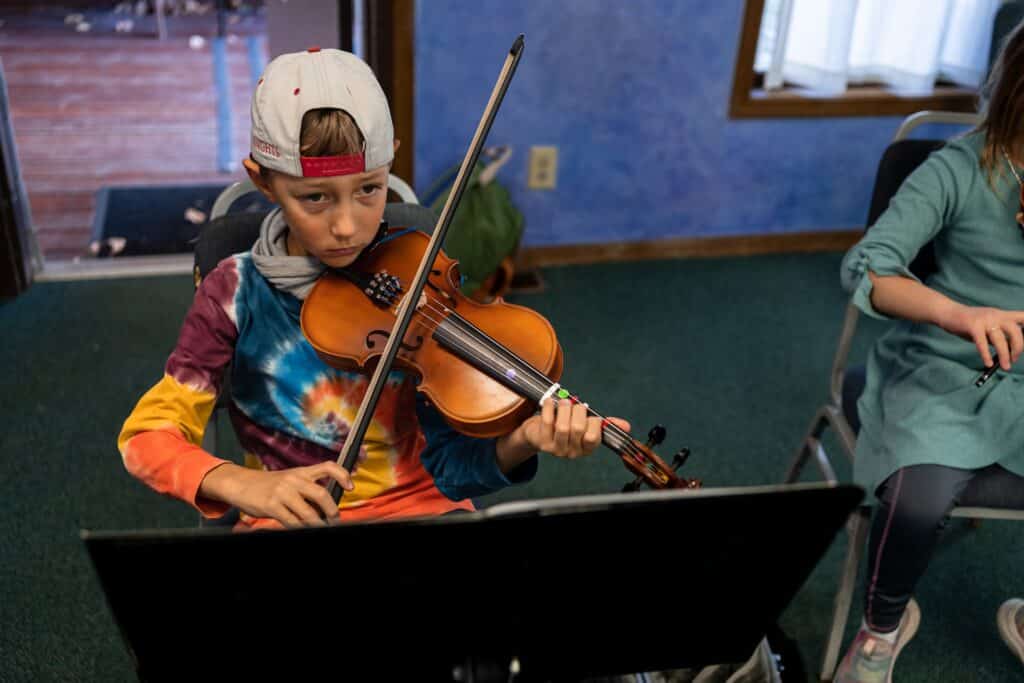
From first note to full ensemble: a journey through the grades
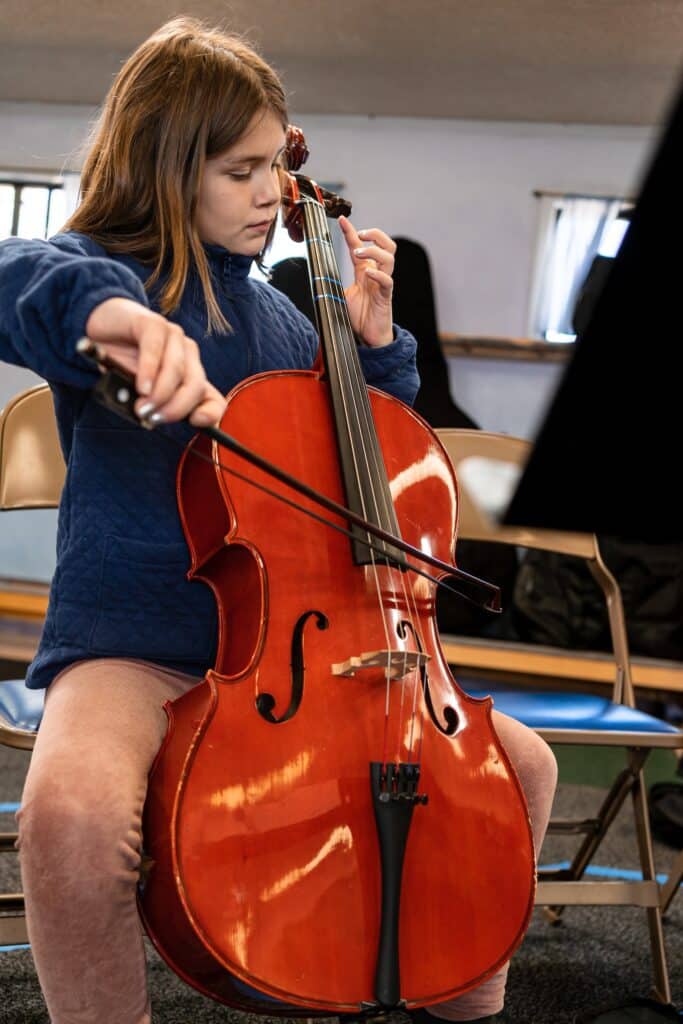
Lower School
In the lower school, music is not treated as an isolated subject, but as a living element that breathes through every part of the school day.
Beginning in the early grades, children enter a “dreamy,” imaginative musical world, singing songs that mirror the changing seasons and playing simple pentatonic flutes, which naturally echo the gentle pitch of a young child’s voice.
As students reach third grade—a milestone marked by a developmental shift toward greater self-awareness—the curriculum transitions to diatonic recorders, introduces formal music notation, and brings the foundational challenge of playing a stringed instrument.
Through daily singing, rhythmic movement, and instrumental practice, lower school students develop deep spatial awareness, fine motor coordination, and active listening skills, establishing a rich artistic foundation that prepares them for the complex ensemble work of the years ahead.
Middle School
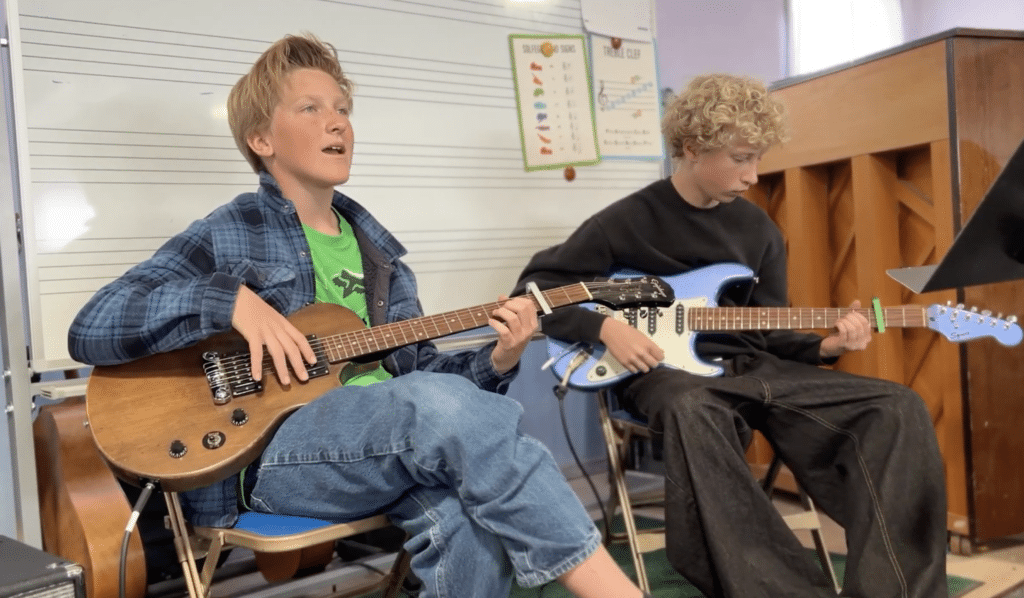
In the middle school, the music curriculum expands to meet the emerging individuality and intense emotional landscape of early adolescence.
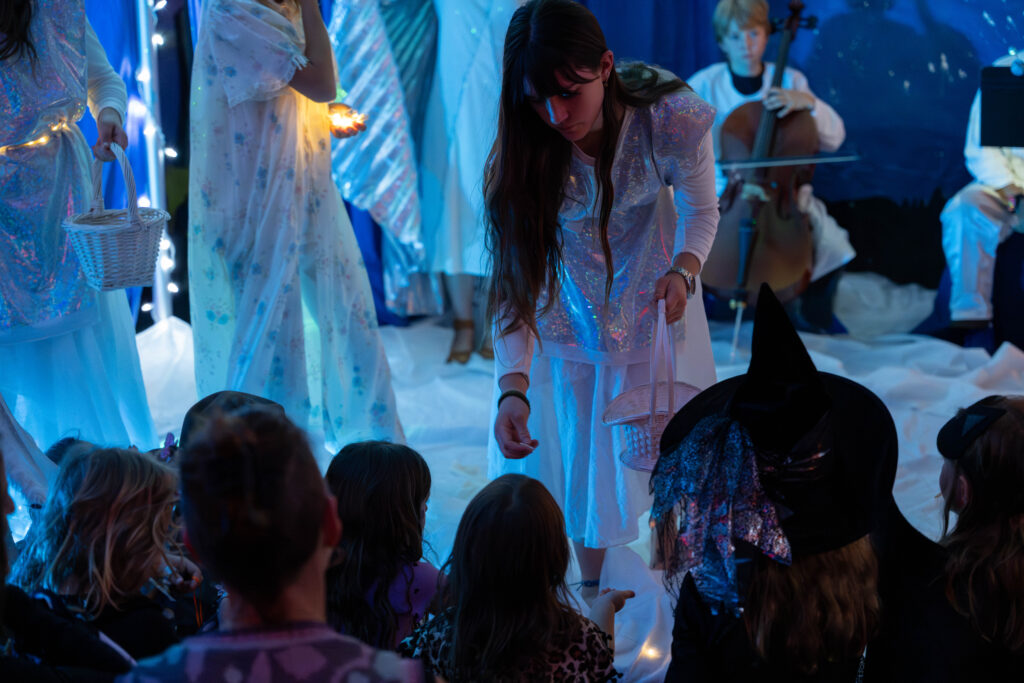
Building upon the foundational skills of the lower school, students transition from individual or class-level practice into larger, more complex ensembles, including full middle school orchestras and multi-part choruses.
Musically, this stage introduces sophisticated multi-part harmony, advanced music theory, and a broader range of repertoire that challenges students to refine their technical proficiency and artistic expressiveness. Socially and emotionally, group music-making becomes a powerful tool for connection during these transitional years.
By navigating the shared responsibility of orchestral and choral work, middle schoolers learn to balance their own developing voices with the collective harmony of the group—fostering deep empathy, mutual respect, and a profound sense of belonging.
High School
In the high school, the music curriculum reaches its peak, serving as a powerful bridge to mature artistry and intellectual depth.
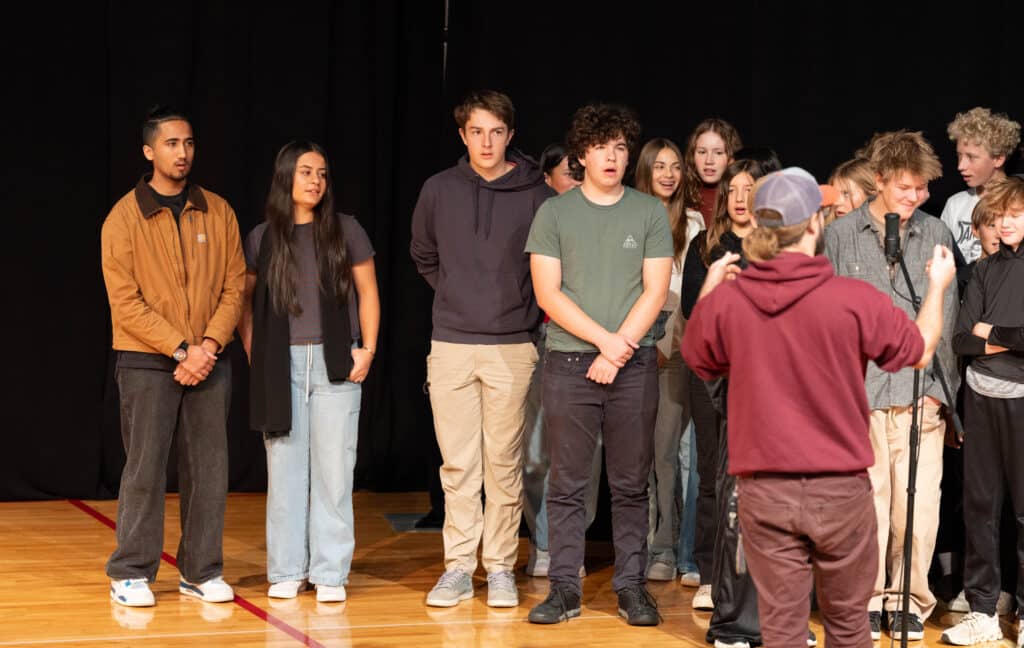
As students navigate the complexities of young adulthood, their musical engagement transitions into advanced, large-scale ensembles, including the high school orchestra and a selective, multi-part concert choir. The repertoire shifts to demanding classical masterworks, complex contemporary compositions, and diverse global traditions that require heightened technical mastery, refined phrasing, and a sophisticated grasp of music theory.
Beyond technical skill, high school music at a Waldorf school is an exercise in profound social responsibility and self-actualization.
In these final years, students must consciously balance their distinct individual voices with the rigorous demands of the collective ensemble—cultivating an enduring capacity for deep listening, creative collaboration, and empathetic leadership that serves them far beyond the stage.