World Languages
Building global perspectives through the study of world languages
A window to the world: The cognitive and social power of world languages
In Waldorf education, learning two foreign languages—Spanish and German—begins in first grade to build deep cognitive flexibility. Rather than preparing students for a global marketplace, this early exposure helps children break free from a monocultural mindset. By expressing themselves in multiple tongues early on, they foster lifelong open-mindedness and adaptable thinking before their own habits of thought are fully set.
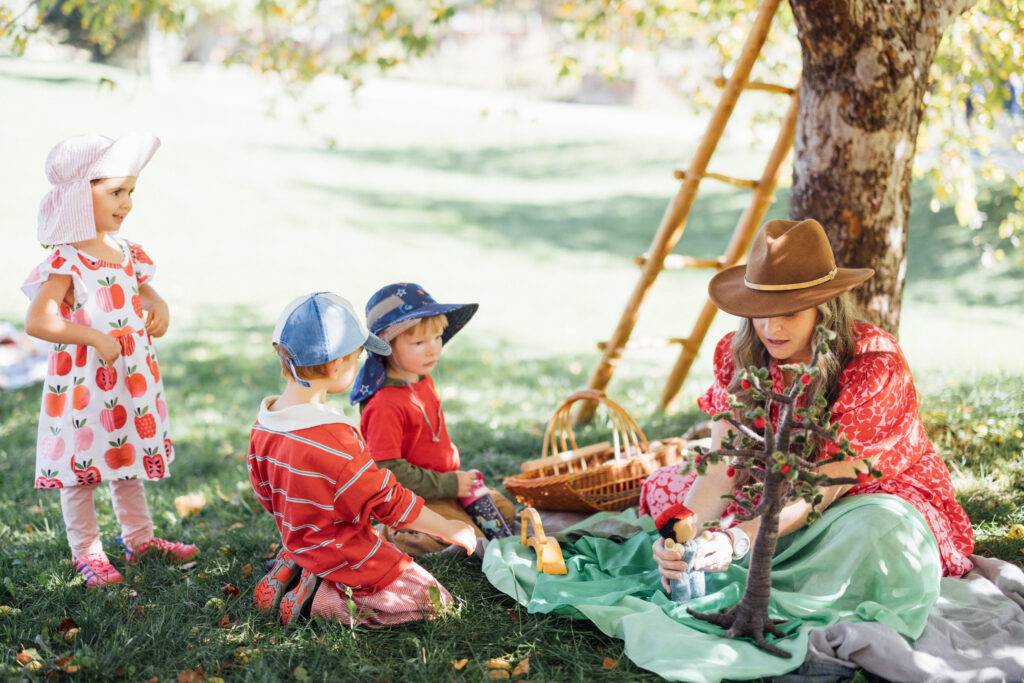
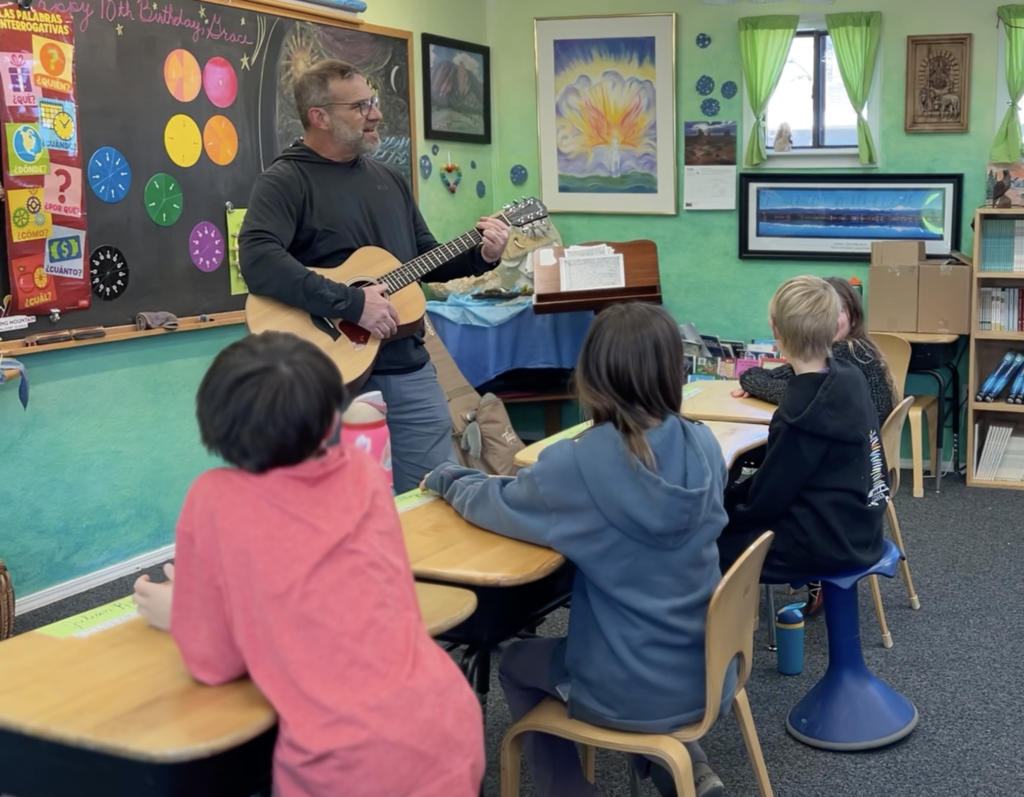
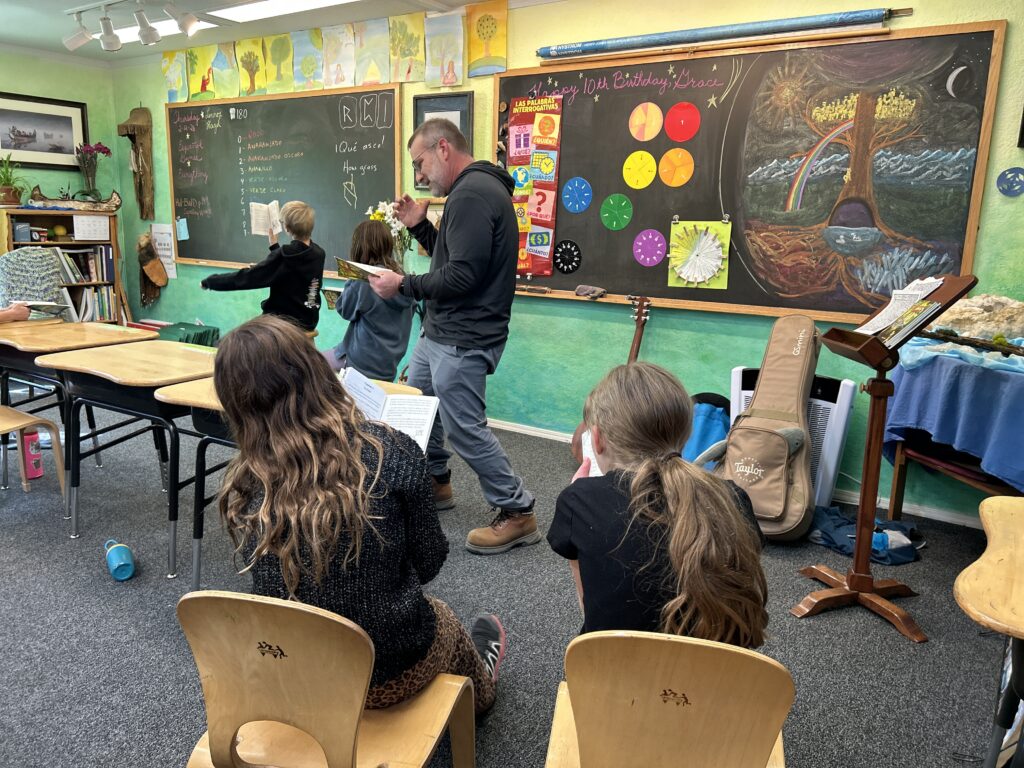
The early curriculum completely bypasses textbooks and grammar drills in favor of an immersive oral experience. Children learn naturally through imitation, absorbing Spanish and German through song, poetry, and storytelling. By connecting with the musical qualities of a language first, they internalize its phonetic soul before formal reading and writing are introduced later.
Ultimately, this approach serves as a window into other cultures, cultivating deep empathy and global citizenship. By learning how others structure their thoughts, students learn to step outside themselves and view the world through a broader lens. This oral focus also refines their capacity for active listening, helping them navigate relationships with greater sensitivity.
Why world languages matter
Decades of neurological and academic research confirm that learning multiple languages is a profound catalyst for a child’s cognitive, academic, and socio-emotional growth.
- Preserved Brain Matter: Children and adolescents who speak more than one language retain more gray matter and increase white matter during brain development, leading to more efficient structural connectivity.
- Enhanced Executive Function: Managing multiple active languages strengthens the brain’s “executive control,” significantly improving a child’s ability to switch tasks, control impulses, and focus.
- Boosted Math & Literacy Proficiency: Long-term dual-language students show compounding academic gains, with studies showing 64% of dual-immersion students reaching math proficiency compared to just 55% of their monolingual peers.
- Advanced Perspective-Taking: Navigating multiple languages builds early social and emotional skills, giving children as young as age three a measurable head start in understanding other people’s perspectives.

Lower School
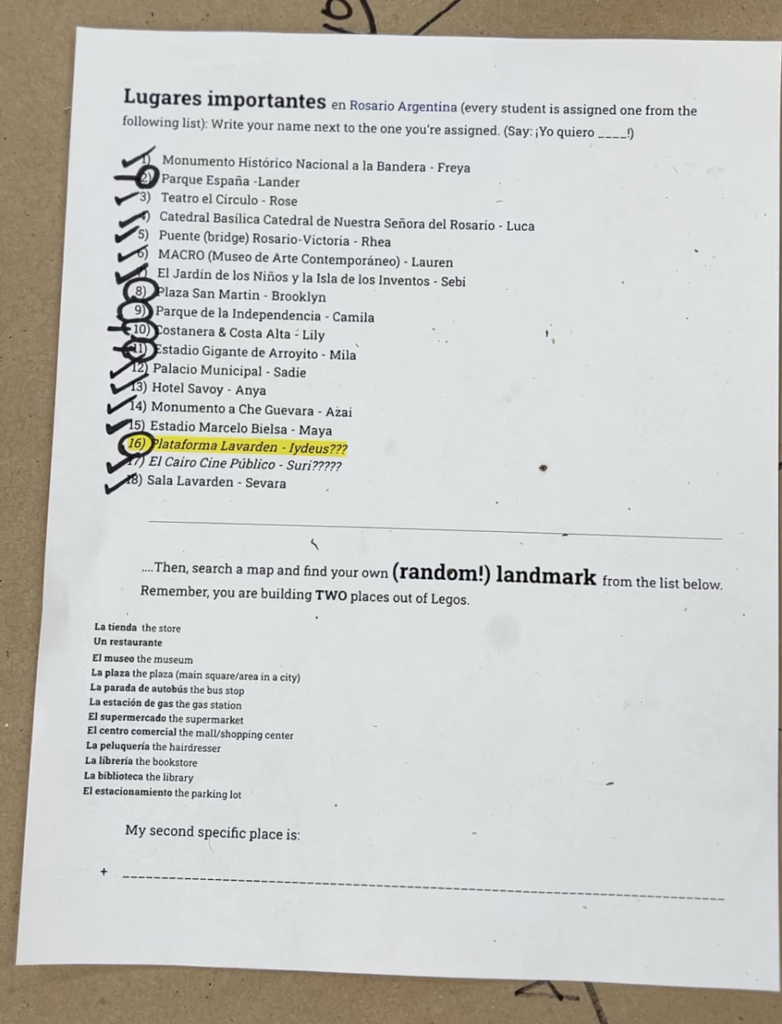
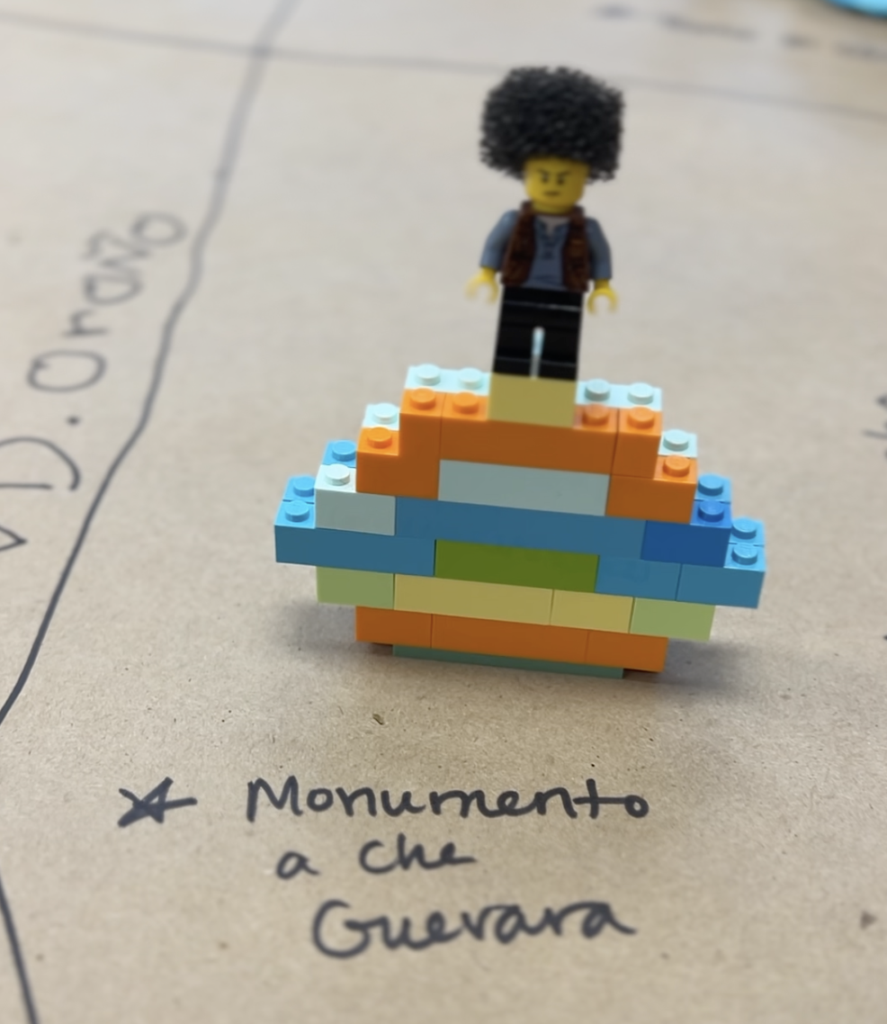
In the Lower School, the world languages program is designed to align with the young child’s natural capacity for imitation and absorption. Rather than using textbooks, worksheets, or grammar drills, our approach is entirely oral and experiential. Through songs, rhythmic movement, poetry, storytelling, and active games, children immerse themselves in the music and feeling of the language. This allows them to internalize the unique phonetic soul of a language naturally and joyfully, long before they are asked to analyze its intellectual grammar rules in the later grades.
By beginning this immersion early, children benefit from heightened cognitive flexibility and a deeper capacity for active listening. This dual-language exposure expands their brain development and executive functioning while preventing a single, monocultural way of viewing the world. Ultimately, learning languages in the Lower School serves as a vital window into the soul of other cultures—helping children step outside themselves to build lifelong empathy, social curiosity, and authentic human connection.
Middle School
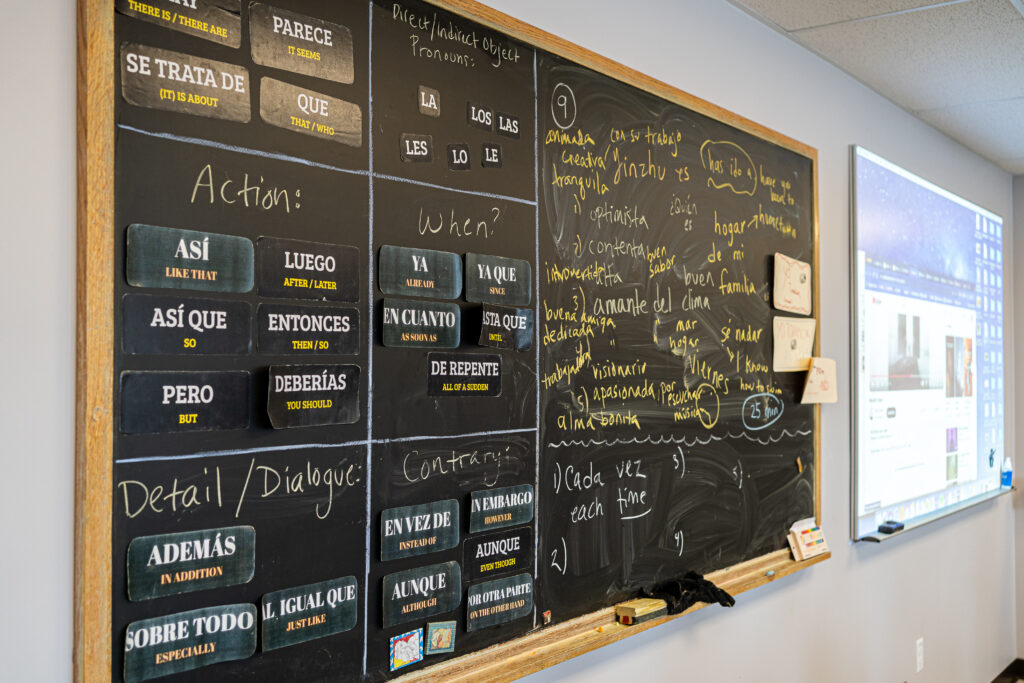
In the Middle School, the world languages curriculum shifts to meet the emerging intellectual and analytical capabilities of early adolescence. While the foundational years focus on warm, oral immersion, middle schoolers begin to consciously examine the structure, grammar, and mechanics of the languages they speak. Through written composition, reading literature, and conversational practice, students transition from intuitive absorption to active, independent command of the language.
This developmental step builds critical academic skills, strengthening memory, linguistic precision, and logical thinking. At the same time, the program deepens the students’ relationship to the wider world. By studying the history, geography, and literature of other cultures, middle schoolers learn to appreciate perspectives different from their own, fostering the self-reflection and social empathy necessary to navigate the complexities of modern global citizenship.
High School
In the High School, world language study evolves into a rigorous, immersive exploration of literature, historical context, and fluid self-expression. Having established intuitive fluency in their younger years and analytical mechanics in middle school, high schoolers now engage with the language as a vehicle for complex thought. Students analyze authentic texts, debate contemporary global issues, and write nuanced essays, transitioning from functional communication to true linguistic mastery.
This advanced stage of learning challenges students to think critically and express themselves with clarity, subtlety, and sophistication. By diving deeply into the cultural, historical, and literary landscapes of other societies, high schoolers cultivate an expanded global perspective. This deep academic and cultural engagement prepares them to step into the world as empathetic, articulate leaders capable of building genuine cross-cultural connections.