Raising capable, compassionate, and creative thinkers
This is the Waldorf Advantage

Developmental academic rigor
Waldorf academics are strategically timed to match a child’s cognitive development. We introduce complex subjects only when students have the intellectual maturity to master them deeply, moving beyond simple memorization toward true understanding and critical thinking skills.

Small student-to-teacher ratio
By staying with the same group for multiple years, our teachers develop a profound bond with every child. In our small classroom environments, every student receives the personalized mentorship and guidance necessary to reach their full potential throughout their journey.

Integrated & experiential learning
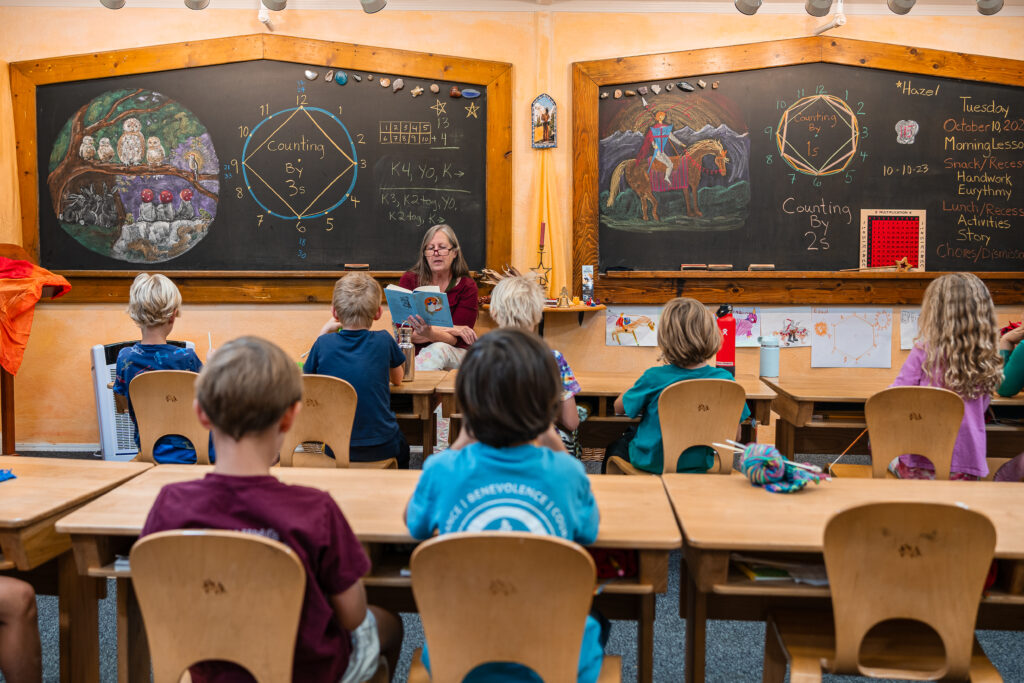
We integrate artistic expression and practical handwork into core academic subjects like geometry and history. This “Head, Heart, and Hands” approach ensures students don’t just learn a topic—they experience it, building superior long-term retention and mastery.

A living campus & active discovery
Our Boulder campus serves as an extension of the classroom. By utilizing our natural surroundings for field sciences and movement, we bridge the gap between abstract concepts and the real world, fostering a lifelong curiosity for learning and discovery.
Your admissions journey starts here.
Experience the magic of our campus in person.

Your Journey to Joining Our Community
1. Explore
2. Visit
3. Financial Planning
4. Apply
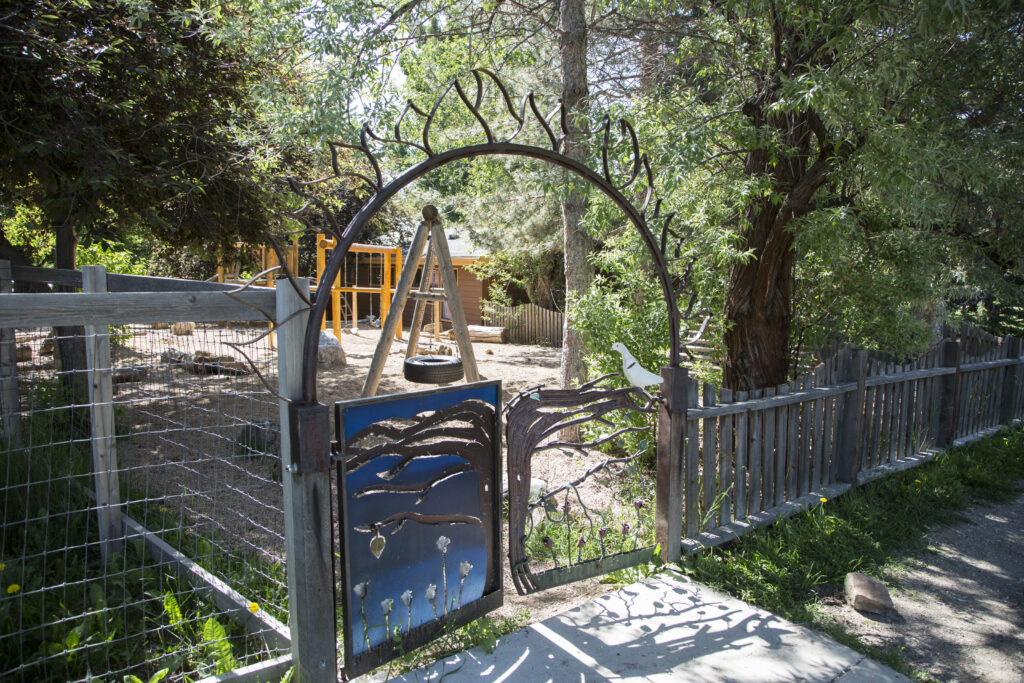
Tuition & Affordability
We believe Waldorf education should be accessible. Learn more about our Tuition Assistance Program.
Admissions Deadlines and Dates 2026 - 2027 School Year
Please contact the Admissions Office at admissions@smwaldorf.org about space availability.
If you are planning to apply for tuition assistance, please apply as soon as possible each school year.
Visit the Tuition Assistance tab on our website for more information.
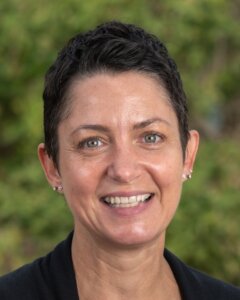
Meet our Admissions Director, Kimberly Rector
With over 14 years of experience in Waldorf education, Kimberly is dedicated to helping families find the right path for their children.
- krector@smwaldorf.org
- (303) 951-8583
Upcoming Events
Middle & High School Open House
Saturday, March 28th 11am – 1 pm at Shining Mountain
Workshop: The Shadows of Parenting: Understanding and Befriending Unconscious Influences
Tuesday, March 10 3:30 – 5pm in Eurythmy Room
Waldorf Myths vs. Truths
Truth: Art is not a replacement for academics; it is the delivery system for them. While students engage in painting and music, they are simultaneously mastering rigorous math, science, and humanities. For example, students might draw a human heart to deepen their understanding of anatomy rather than just memorizing a textbook diagram.
Truth: Waldorf classrooms are highly structured and follow a predictable daily, monthly, and yearly rhythm. Teachers serve as authoritative guides (not peers) who orchestrate carefully planned, developmentally appropriate lessons.
Truth: Literacy is introduced through a holistic, evolutionary process. Students begin with oral storytelling and phonemic awareness in early years, moving to written symbols and then formal reading, typically around age 6 or 7. Research shows this “unhurried” start aligns with developmental readiness, often resulting in students who become voracious, lifelong readers by the upper grades.
Truth: The goal is wise and conscious engagement with technology rather than early exposure. By delaying tech use in the early years, schools focus on building the sensory integration and critical thinking skills needed to use digital tools responsibly later on. This approach is favored by many tech professionals—including those at major Silicon Valley firms—who value the creative thinking skills it fosters.
Truth: Waldorf education is non-sectarian and non-religious. While teachers study Rudolf Steiner’s Anthroposophy as a philosophical framework for understanding child development, these spiritual concepts are not taught to the students. Instead, the focus is on a holistic, human-centered approach that encourages students to develop their own independent thinking and values rather than following a specific dogma.