By Joshua Berman

In my 8th grade Spanish class, students listen to podcasts featuring musicians from the Spanish speaking world, most recently, a young Mexican engineering student who raps in his indigenous language of Cuicateco. In 6th grade, my Spanish students participate in a hands-on, Fair Trade bracelet sale that connects them with Central American artisans; my younger students have had interactive classroom visits from Nicaraguan singer-songwriters, drummers, and sawdust painters. 

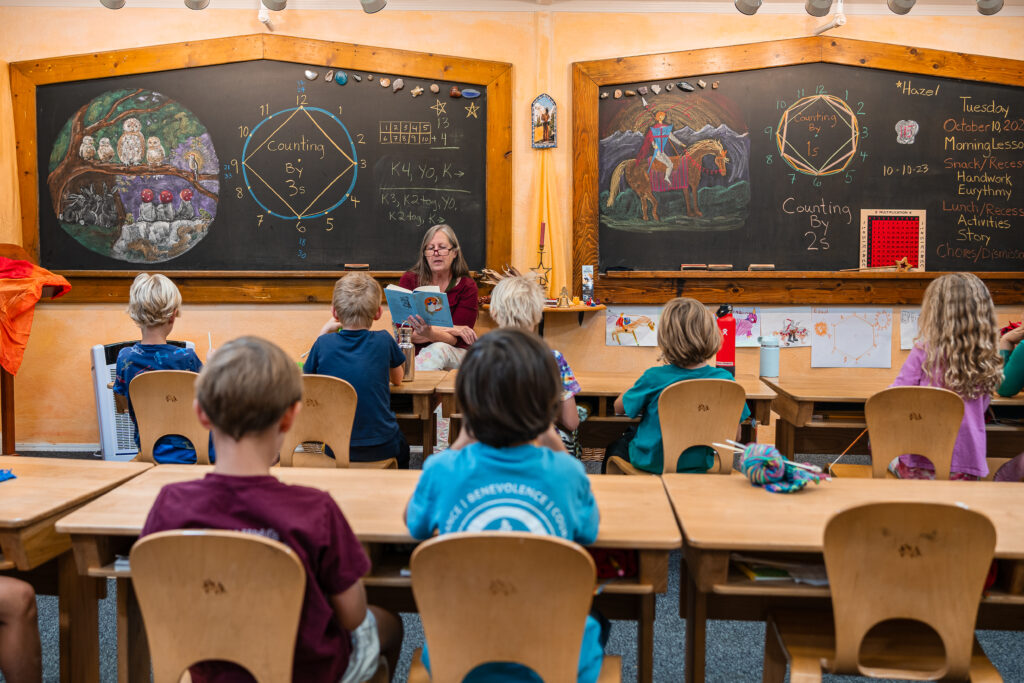
As a Spanish teacher for grades 1–8 at Shining Mountain Waldorf School (SMWS) in Boulder, CO, the effort to include authentic voices in my lessons is par for the course. Especially as a non-native Spanish speaker and teacher who is always looking for responsible, respectful ways to expose my students to new countries and cultures, a process fraught with the “cultural appropriation versus appreciation” discussion, and one that has led me to new resources and voices. 

My goal of authenticity helps first with my teaching, but also overlaps with a larger project and objective of our school—to become a more diverse, equitable, and inclusive place. My tiny steps to make the Lower School Spanish curriculum more inclusive are but a drop in the bucket of the greater efforts across our community, which began four years ago. 

How it started.

The email from our school director inviting me to serve on the newly formed Diversity, Equity, and Inclusivity (DEI) Committee dinged into my desktop on the morning of Tuesday, November 8, 2016. I read it, not yet knowing that on that day—election day—our country would veer, most would argue, toward forces of division rather than diversity. On that morning, I simply saw a chance to delve, with a group of fellow SMWS community members, into this new work.

I showed up to that first meeting, a circle of a dozen or so of us, in the living room of our community house, feeling curious but overwhelmed. The temptation to keep doing nothing about the elephant in the room—our school’s glaring lack of racial diversity—was no longer an option, yet there it was, this large, cumbersome, and difficult challenge to face. Yes, we exist in a city that is 90% White and a scant 1.2% Black (U.S. Census), but this was no longer a valid excuse for inaction on diversity, a term which we’d also need to expand beyond race. 

And that’s what we did. We began by redefining diversity, and then, as Leigh Hill, then High School Administrator and one of our founding co-chairs of the DEI committee, explained, identifying “the questions we need to be asking in order to deepen our own understanding of oppression, bias, prejudice, equity, diversity, and inclusion.”

“Starting this work at SMWS,” wrote Hill, “was in many ways an easy thing to do. There was already strong interest in the parent community and the school was hearing concerns about cultural appropriation during assemblies, plays, and festivals, providing the community with an accessible entry point into our DEI work.”

Add to that the fact that the work was supported by school leadership and the Board of Trustees, who made professional development funds available for training. In 2018, SMWS leadership attended the social justice themed national AWSNA conference in Washington, D.C., and walked away inspired to keep the momentum going. Hill wrote in an article for our community about the school’s DEI work that year, in which she said: 

“Rudolf Steiner gave us an incredible foundation through the curriculum to begin our conversations. The challenge for all of us working in Waldorf education now is to ensure that we are being responsive to our present time and needs, as well as looking towards the future. We have the opportunity to transform how we have previously taught the Age of Exploration by deepening our own understanding of the impact of colonization, conquest and invasion around the world and in our own backyards. We have the opportunity to ensure that LGBTQ and gender expansive folks can see themselves reflected in the stories we tell, the literature we read, and in the community of families who surround and support them. We have the opportunity to ensure that our festivals are representative of the families who have chosen to attend our school, as well as those who are seeking us out. We have the opportunity to help our students explore a world filled with scientists, mathematicians, writers, dancers, musicians, artists, philosophers, historians and activists who represent us all: all genders and identities, all religions and spiritual practices, all sexual orientations, all races and ethnicities, all abilities, all ages, all statuses.”

How it’s going.

For the first few years after I started teaching 14 years ago, I was focused more on how to get my students to speak Spanish and how to manage a classroom, and less on searching for ways to expand and diversify my curriculum. Now, in part because of the DEI Committee, proactively looking for ways to make what we teach, as a school, more inclusive and approachable, is what we all do. 

The agenda for next week’s DEI meeting includes an update on the shared, grade-by-grade teacher resource (it’s up to 30 pages!). For the next few meetings, we’ll be splitting into subgroups—faculty, parents, administration, and high school students—so we can simultaneously work on different issues specific to those groups. In our High School, there is a new senior course entitled “The Sociology of Discrimination” and another in the spring that will address anti-racism. 

Another recent development: the High School Student Leadership Group will begin participating directly with the DEI Committee. “Inviting our high school students to engage with us in this work of creating an inclusive school community is essential,” writes School Director, Mary Fairfield. “We, the educators and administration, have so much to learn from their experience and understanding of the world. Their ability to help resolve these social justice issues in their lifetimes must not be downplayed.”

As the work has continued, I’ve felt a growing awareness in our community, and also in the greater Waldorf world. This morning, in my inbox: invitations to a virtual diversity book fair and to live AWSNA sessions with titles like “Reimagining Waldorf Pedagogy: Nurturing Social Renewal Through Education for Racial Justice,” “Queer Education Hour, Topic: Terms & Lingo 101 Sexuality and Identity,” and “Equitable and Inclusive Admissions Practices.” 

Not only that, I see the awareness working its way through my Spanish teacher colleagues from across the country. I could now choose from an increasing variety of Spanish language readers with characters of color, LGBTQ stories, and themes like immigration, being the new or different kid, and more. This became available because the books were being written and distributed by educators who, like us at Shining Mountain, were also trying to help more of our students be able to see themselves in our materials. 

Where we’re headed.

Have we succeeded in getting rid of that elephant in the room, fully diversifying our student body, faculty, and staff, to reflect fair, equitable representation of our society? No. But is the landscape around us transforming into a more supportive, thoughtful environment in which to keep asking questions and making changes? Yes, it has. 

Kristin Foreman, Co-chair of the DEI Committee since its start, writes, “this work is never ending, and it is challenging and sometimes hard. We have made mistakes and we learn with gratitude and humility. Our work on issues of diversity, equality, and inclusivity must never stop, and I am grateful to be part of a community so dedicated to growing, adapting, changing, and leaving this world a kinder, more equal place for all our children.”

Last week, two Shining Mountain high school seniors, Olivia Jabari and Fiona Lovejoy, Class of 2021, led an initiative by the Student Leadership Group to purchase and display a set of rainbow Pride and Black Live Matters flags around campus. I found the two sitting together during art class; we chatted as they worked, scraping at two enormous hunks of alabaster. 

“We say we’re so inclusive and accepting,” said Lovejoy, who has attended SMWS since 1st grade, “but it doesn’t always feel that way to everyone, especially in such a small school.” 

The students had specifically noticed that talking about LGBTQ issues in a way that made everyone feel safe and comfortable was something that could be improved upon. So they started searching for a way to say to their community, “We’re here for you, we support you,” and to the Black Lives Matter movement, they wanted to state, “we support you, we stand with you.”

So they suggested the flags. And though both students were quick to point out that what they did was “not a solution in any way,” they did feel like hanging them up was something “we can do right now.” 

With that, they turned their attention back to the heavy stones before them, and continued to file away, small piles of white powder gathering beneath their tools. 


—Joshua Berman is a Spanish teacher and Social Media Director at Shining Mountain Waldorf School in Boulder, CO. He is also a freelance writer; his website is JoshuaBerman.net. 

SHARE THIS
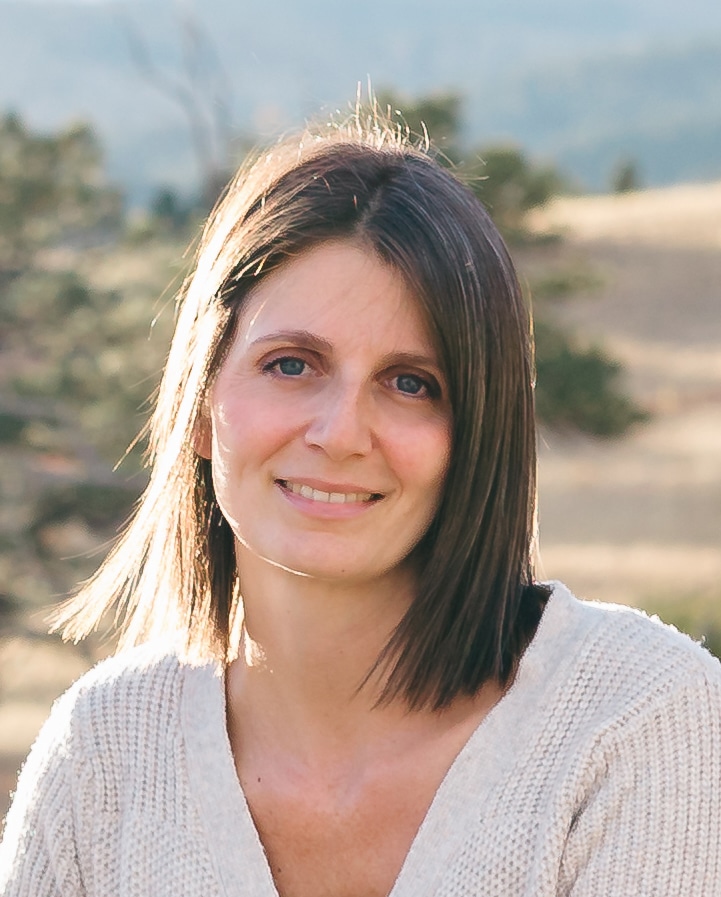
Donna El-Hehiawy

HR Director

Donna resides in Boulder, Colorado, where she shares her home with her dog and cat and her visiting daughters, who are currently attending college. Originally from Encino, California, Donna moved to Colorado to pursue her education and graduated from the University of Colorado at Boulder with a Bachelor of Science in Human Resources. What began as a college journey quickly became a lifelong connection to the community she now calls home.

After graduation, Donna built a successful career in Human Resources, gaining more than 15 years of professional experience while also dedicating many years to active involvement in her daughters’ schools. Throughout her career, she has been known for her collaborative spirit,
strong organizational skills, and genuine commitment to supporting people and communities.

Donna brings enthusiasm, warmth, and a deep sense of purpose to her role at the Shining Mountain Waldorf School, where she is excited to support the school community.

Outside of work, she is an avid bicyclist and enjoys kayaking, exploring the outdoors, and capturing meaningful moments through photography.

Job Details

  • Job Title: Facilities & Grounds Assistant

  • Program: Administration

  • Reports to: Facilities & Grounds Director

  • FLSA Status: Non-Exempt

  • Date: January 2026

Position Summary

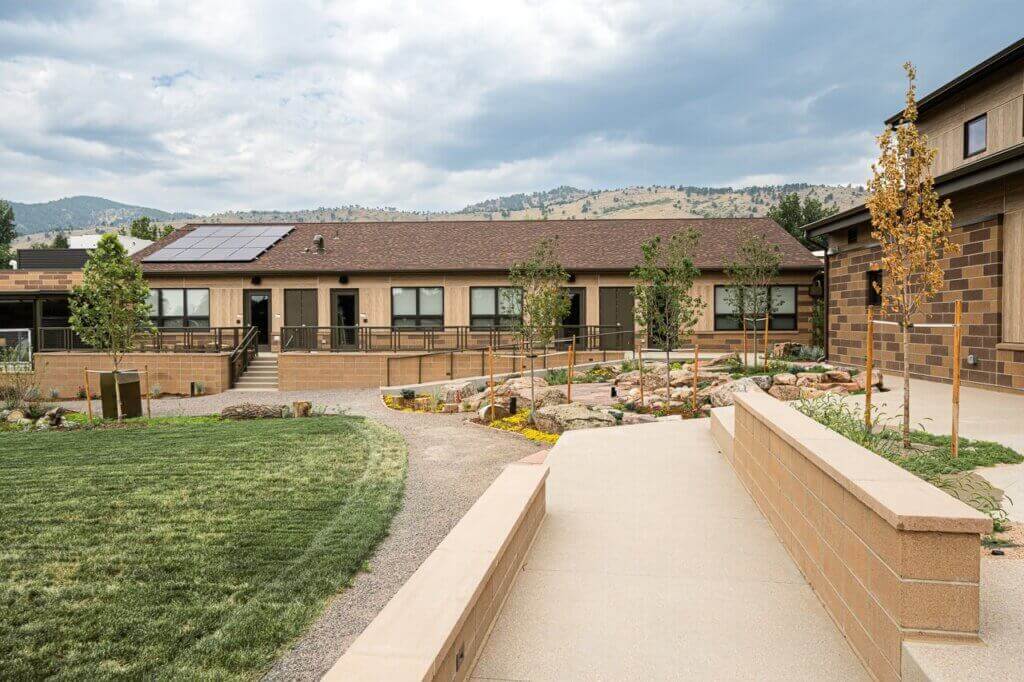
Shining Mountain Waldorf School (“SMWS”) is a PreK-12th grade campus consisting of 8 acres and 15 buildings located at the foothills of North Boulder, Colorado. In conjunction with the Facilities Director, the Facilities and Grounds Assistant provides year-round maintenance, seasonal upkeep, and improvement of school buildings and grounds to support our nature and outdoor school curriculum. Maintenance, safety, and improvement projects are essential to welcome visitors and the SMWS community to the natural beauty of the SMWS campus.

Essential Duties and Responsibilities

  • Required skills to address issues relating to campus maintenance: plumbing, electrical, carpentry, painting, HVAC, care of the grounds, etc.

  • Daily tour of campus and playground for hazards, trash, safety, and wildlife concerns

  • Daily response to requests for repairs and campus assistance

  • Daily late afternoon safety checks for campus and building safety

  • Weekly service and safety inspection of school buses (fuel, oil, tires, etc.)

  • Weekly cleaning and organizing of facilities and grounds workshop

  • Weekly safety inspections of playground equipment

  • Preparation for school events and meetings, including setup and breakdown of tables and chairs

  • Seasonal work, inspecting and maintaining classrooms, air conditioners, swamp coolers, furnaces, water heaters, thermostats, etc.

  • Supplement early morning seasonal and evening snow removal and ice management throughout campus in preparation for the student and parent arrival and departure of the school day

  • Delivery and moving of items throughout campus classrooms and buildings

Additional Responsibilities

  • Outdoor work, walking, repairing, and attention to our 8-acre campus

  • School events set up and break down – festivals, concerts, and plays   

  • Driving ability to include driving school truck with trailer   

  • Working knowledge of automotive care and maintenance   

  • Working with faculty and assisting in moving and preparing classrooms   

Education and Qualifications

  • Familiarity with landscaping and irrigation, plumbing, electrical, carpentry, painting, HVAC, and general maintenance items

  • Friendly and approachable temperament working with faculty, staff, students, and community

  • Previous construction, trade, and technical skills

  • Self-starter in recognizing and completing necessary campus needs and maintenance

  • Skill and ability to operate power tools in accordance with proper safety guidelines

  • Basic computer skills

  • Driver’s license required with excellent driving record

  • Available to work a flexible schedule at times when work is needed outside of normal working hours – early mornings and weekends (early/late snow removal, event set up and break down, facilities emergencies, etc.)

Work Setting

  • Status: Full time – 40 hour a week non-exempt position

  • Type: This is an hourly, year-round position

  • Hours: 8:30 am to 4:30 pm (may require some early morning and evening hours)

  • Environment: Work setting varies based on assignment – indoor and outdoor work on campus and buildings

Salary and Benefits

  • Pay: Hourly wage of $25.00 per hour – overtime paid (time and ½) when over 40 hours are worked per week

  • Time Off: Personal Time Off (monthly accruals of 2 weeks and 3 weeks after 1+ years)

  • Sick Leave: Colorado Paid Sick Leave (1 hour earned each 30 hours worked up to 48 hours each calendar year)

  • Holidays: Up to 15 Paid National Holidays per calendar year, including a paid week during the December holidays

  • Benefits: Medical, dental, vision, life insurance, long-term disability, 401(k) with match (determined annually), flexible spending account, and other ancillary benefits

Physical Requirements

The physical demands described here are representative of those that must be met by an employee to successfully perform the Essential Duties and Responsibilities of this job. While performing the duties of this job, the employee must be able to perform:

  • General construction work-related requirements, including but not limited to: lifting, bending, standing, kneeling, carrying items, working on a ladder, etc.

  • Ability to lift at least 60 pounds

  • Work in tight spaces – work may be in small spaces within buildings, crawl spaces, and frame restrictions

  • Reasonable accommodations may be made to enable qualified individuals with disabilities to perform essential functions. 


Interested candidates should send a cover letter, resume, and three references to hrmgr@smwaldorf.org


Shining Mountain Waldorf School is fully committed to Equal Employment Opportunity and to attracting, retaining, developing, and promoting the most qualified employees without regard to their race, religion, gender, gender identity, disability, familial status, sexual orientation, or national or ethnic origin, citizenship status, veteran status, or any other characteristic prohibited by state or local law. We are dedicated to providing a work environment free from discrimination and harassment, where employees are treated with respect and dignity. 


Job Details

  • Job Title: Substitute Teacher

  • Program: Grades 1 through Grade 12

  • Reports to: Campus Operations Director

  • FLSA Status: Non-Exempt

  • Date: October 2024

Position Summary

Shining Mountain Waldorf School, a PreK to High School, is seeking Substitute Teachers. In order to create an encouraging learning environment for students while their regular Teacher is absent, our Substitute Teachers will need to effectively manage and instruct the class. We are looking for individuals who have teaching experience, love the classroom environment, and are available (sometimes on very short notice) to work during the week. Knowledge of Waldorf education is a plus.

Essential Responsibilities

  • Teaching and supervision of students in the event that their regular teacher is unable to lead class.

  • Manage classroom behavior and follow lesson plans provided by the regular Teacher to create a cohesive and consistent learning experience for students.

  • Manage the classroom effectively to encourage student participation, minimize distractions and maintain a positive learning environment.

  • Adapt teaching methods to fit the needs of each individual student.

  • Supervise students in and out of the classroom, including in class transitions, and on the playground.

Work Setting

  • Classroom and playground environment

Salary and Hours

  • Pay: $25 per hour with a 2-hour daily minimum

  • Timesheets are required to be completed

  • Substitute Teaching hours vary and are contingent on SMWS Faculty absences from the classroom and class needs

  • Calls to Substitute Teach may be made on very short notice – evening and morning hours

  • Substitute hours are based on SMWS need for classroom coverage

Education and Qualifications

  • Bachelor’s Degree

  • Teaching experience and classroom experience required

  • Comfortable with students and academic focus

Physical Requirements

The physical demands described here are representative of those that must be met by an employee to successfully perform the Essential Duties and Responsibilities of this job. While performing the duties of this job, the employee must be able to perform:   

  • Sitting and standing for class presentations   

     
  • Lift 25 pounds, bending, stretching   

     
  • Mobility to move about the classroom, walking around our 12 -acre campus, and playground   

     
  • Reasonable accommodations may be made to enable qualified individuals with disabilities to perform essential functions.  

 
Interested candidates should submit a letter of interest and resume to hrmgr@smwaldorf.org.


Shining Mountain Waldorf School is fully committed to Equal Employment Opportunity and to attracting, retaining, developing and promoting the most qualified employees without regard to their race, religion, gender, gender identity, disability, familial status, sexual orientation or national or ethnic origin, citizenship status, veteran status, or any other characteristic prohibited by state or local law. We are dedicated to providing a work environment free from discrimination and harassment, where employees are treated with respect and dignity.


Kim Rector
Kim Rector

Admissions Director

Kim brings more than 12 years of dedicated experience in Advancement and Admissions within Waldorf Education. Kim’s journey with Waldorf Education began in 2013 at the Austin Waldorf School, where she discovered a deep passion for Waldorf pedagogy and Anthroposophy. After relocating to Colorado in 2014, Shining Mountain Waldorf School quickly became a second home for her family. That same year, Kim stepped into the role of Lower School Receptionist, marking the start of nearly a decade of service and leadership at SMWS.

With over 15 years of experience in non-profit fundraising and event management, Kim was a natural fit for the position of Development Director at Shining Mountain, a role she held from 2017 to 2020. She then transitioned into Admissions, serving as Admission Director from 2020 until her family’s return to Austin in 2023. Kim continued work in Waldorf Education by serving as Admission Director at the Austin Waldorf School for the following three years.

Kim studied Biochemistry at Texas State University and has completed her Foundation Studies in Anthroposophy.

Outside of her professional life, Kim and her husband, Julian, are parents to their three children, Sydney, Suri, and Julian. Together, they enjoy hiking, fishing, camping, skiing, and cooking as a family.