
Play-Based Learning | Scientists Say Child’s Play Helps Build A Better Brain

August 6, 2014

Heard on Morning Edition David Gilkey/NPR

Jon Hamilton 2010

Deion Jefferson, 10, and Samuel Jefferson, 7, take turns climbing and jumping off a stack of old tires at the Berkeley Adventure Playground in California. The playground is a half-acre park with a junkyard feel where kids are encouraged to “play wild.”

This week, NPR Ed is focusing on questions about why people play and how play relates to learning.

When it comes to brain development, time in the classroom may be less important than time on the playground.

“The experience of play changes the connections of the neurons at the front end of your brain,” says Sergio Pellis, a researcher at the University of Lethbridge in Alberta, Canada. “And without play experience, those neurons aren’t changed,” he says.

Sponsor Message

Our friends at MindShift have been looking at the role of play in learning. Play is as much a part of childhood as school and an organic way of learning. Check out these articles that dig into play:

Let ‘Em Out! The Many Benefits Of Outdoor Play In Kindergarten

Rona Richter/MindShift

How Free Play Can Define Kids’ Success

Free, unstructured play is crucial for children to build the skills they’ll need to be happy, productive adults.

Harnessing Children’s Natural Ways Of Learning

At a school where free play and exploration are encouraged, children can educate themselves under the right conditions.

Despite Benefits, Recess For Many Students Is Restricted

Many children in public school are getting less and less time outside, despite the documented benefits of free play.

It is those changes in the prefrontal cortex during childhood that help wire up the brain’s executive control center, which has a critical role in regulating emotions, making plans and solving problems, Pellis says. So play, he adds, is what prepares a young brain for life, love and even schoolwork.

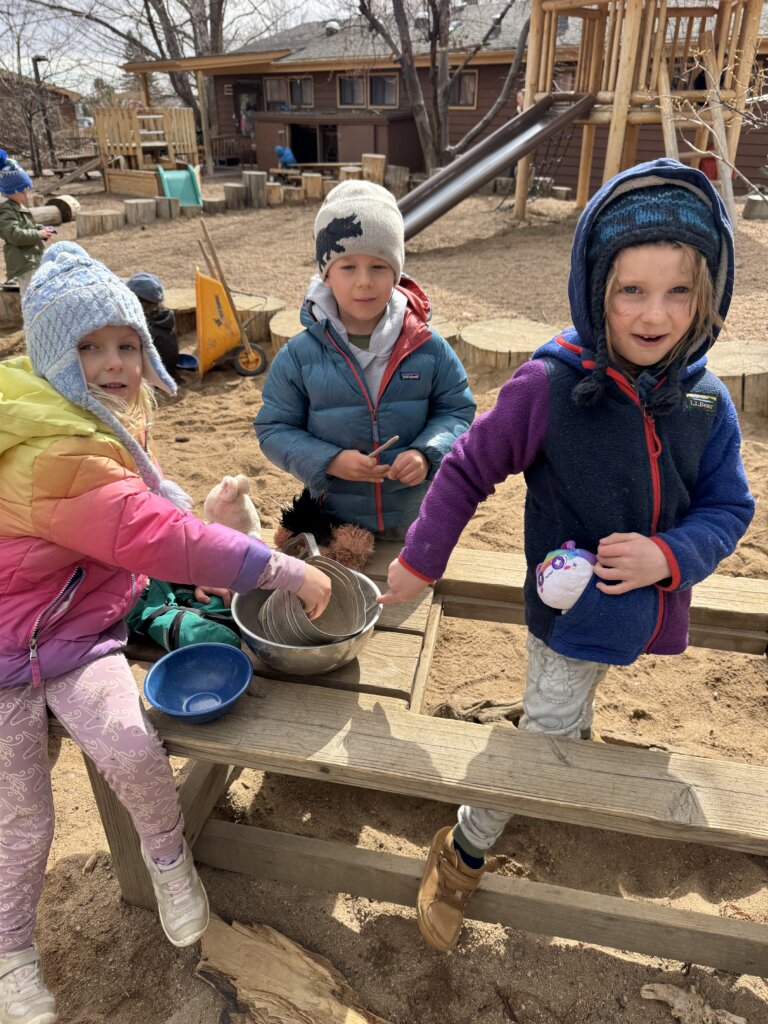
But to produce this sort of brain development, children need to engage in plenty of so-called free play, Pellis says. No coaches, no umpires, no rule books.

“Whether it’s rough-and-tumble play or two kids deciding to build a sand castle together, the kids themselves have to negotiate, well, what are we going to do in this game? What are the rules we are going to follow?” Pellis says. The brain builds new circuits in the prefrontal cortex to help it navigate these complex social interactions, he says.

Learning From Animals

Much of what scientists know about this process comes from research on animal species that engage in social play. This includes cats, dogs and most other mammals. But Pellis says he has also seen play in some birds, including young magpies that “grab one another and start wrestling on the ground like they were puppies or dogs.”

For a long time, researchers thought this sort of rough-and-tumble play might be a way for young animals to develop skills like hunting or fighting. But studies in the past decade or so suggest that’s not the case. Adult cats, for example, have no trouble killing a mouse even if they are deprived of play as kittens.

https://youtube.com/watch?v=4Z_hMYGAQ6k%3Frel%3D0

Where does play come from? Neuroscientist Jaak Panksepp gives a playful answer in this NPR animation.John Poole / NPR YouTube

So researchers like Jaak Panksepp at Washington State University have come to believe play has a very different purpose: “The function of play is to build pro-social brains, social brains that know how to interact with others in positive ways,” Panksepp says.

Panksepp has studied this process in rats, which love to play and even produce a distinctive sound he has labeled “rat laughter.” When the rats are young, play appears to initiate lasting changes in areas of the brain used for thinking and processing social interactions, Panskepp says.

Sponsor Message

The changes involve switching certain genes on and off. “We found that play activates the whole neocortex,” he says. “And we found that of the 1,200 genes that we measured, about one-third of them were significantly changed simply by having a half-hour of play.”

Of course, this doesn’t prove that play affects human brains the same way. But there are good reasons to believe it does, Pellis says.

An overview of the Berkeley Adventure Playground, where children and their parents can paint, hammer, saw and run free.

David Gilkey/NPR

For one thing, he says, play behavior is remarkably similar across species. Rats, monkeys and children all abide by similar rules that require participants to take turns, play fair and not inflict pain. Play also helps both people and animals become more adept socially, Pellis says.

And in people, he says, an added bonus is that the skills associated with play ultimately lead to better grades. In one study, researchers found that the best predictor of academic performance in eighth grade was a child’s social skills in third grade.

Another hint that play matters, Pellis says, is that “countries where they actually have more recess tend to have higher academic performance than countries where recess is less.”
SHARE THIS
- Sarah Gillis, SMWS Class of 2012 and Sr. Space Operations Engineer at SpaceX

“I feel like one of the really important things that you get out of a Waldorf education is curiosity—curiosity to go and learn and explore what’s out there in the world. I fell into engineering and a path that I don’t think I would have anticipated, but having an arts background where you’re bringing creativity and imagination into problem-solving, there’s a really incredible synergy between those.”

- Sarah Gillis, SMWS Class of 2012 and Sr. Space Operations Engineer at SpaceX

Play-Based Learning | Scientists Say Child's Play Helps Build A Better Brain

Job Details

  • Job Title: Facilities & Grounds Assistant

  • Program: Administration

  • Reports to: Facilities & Grounds Director

  • FLSA Status: Non-Exempt

  • Date: January 2026

Position Summary

Shining Mountain Waldorf School (“SMWS”) is a PreK-12th grade campus consisting of 8 acres and 15 buildings located at the foothills of North Boulder, Colorado. In conjunction with the Facilities Director, the Facilities and Grounds Assistant provides year-round maintenance, seasonal upkeep, and improvement of school buildings and grounds to support our nature and outdoor school curriculum. Maintenance, safety, and improvement projects are essential to welcome visitors and the SMWS community to the natural beauty of the SMWS campus.

Essential Duties and Responsibilities

  • Required skills to address issues relating to campus maintenance: plumbing, electrical, carpentry, painting, HVAC, care of the grounds, etc.

  • Daily tour of campus and playground for hazards, trash, safety, and wildlife concerns

  • Daily response to requests for repairs and campus assistance

  • Daily late afternoon safety checks for campus and building safety

  • Weekly service and safety inspection of school buses (fuel, oil, tires, etc.)

  • Weekly cleaning and organizing of facilities and grounds workshop

  • Weekly safety inspections of playground equipment

  • Preparation for school events and meetings, including setup and breakdown of tables and chairs

  • Seasonal work, inspecting and maintaining classrooms, air conditioners, swamp coolers, furnaces, water heaters, thermostats, etc.

  • Supplement early morning seasonal and evening snow removal and ice management throughout campus in preparation for the student and parent arrival and departure of the school day

  • Delivery and moving of items throughout campus classrooms and buildings

Additional Responsibilities

  • Outdoor work, walking, repairing, and attention to our 8-acre campus

  • School events set up and break down – festivals, concerts, and plays   

  • Driving ability to include driving school truck with trailer   

  • Working knowledge of automotive care and maintenance   

  • Working with faculty and assisting in moving and preparing classrooms   

Education and Qualifications

  • Familiarity with landscaping and irrigation, plumbing, electrical, carpentry, painting, HVAC, and general maintenance items

  • Friendly and approachable temperament working with faculty, staff, students, and community

  • Previous construction, trade, and technical skills

  • Self-starter in recognizing and completing necessary campus needs and maintenance

  • Skill and ability to operate power tools in accordance with proper safety guidelines

  • Basic computer skills

  • Driver’s license required with excellent driving record

  • Available to work a flexible schedule at times when work is needed outside of normal working hours – early mornings and weekends (early/late snow removal, event set up and break down, facilities emergencies, etc.)

Work Setting

  • Status: Full time – 40 hour a week non-exempt position

  • Type: This is an hourly, year-round position

  • Hours: 8:30 am to 4:30 pm (may require some early morning and evening hours)

  • Environment: Work setting varies based on assignment – indoor and outdoor work on campus and buildings

Salary and Benefits

  • Pay: Hourly wage of $25.00 per hour – overtime paid (time and ½) when over 40 hours are worked per week

  • Time Off: Personal Time Off (monthly accruals of 2 weeks and 3 weeks after 1+ years)

  • Sick Leave: Colorado Paid Sick Leave (1 hour earned each 30 hours worked up to 48 hours each calendar year)

  • Holidays: Up to 15 Paid National Holidays per calendar year, including a paid week during the December holidays

  • Benefits: Medical, dental, vision, life insurance, long-term disability, 401(k) with match (determined annually), flexible spending account, and other ancillary benefits

Physical Requirements

The physical demands described here are representative of those that must be met by an employee to successfully perform the Essential Duties and Responsibilities of this job. While performing the duties of this job, the employee must be able to perform:

  • General construction work-related requirements, including but not limited to: lifting, bending, standing, kneeling, carrying items, working on a ladder, etc.

  • Ability to lift at least 60 pounds

  • Work in tight spaces – work may be in small spaces within buildings, crawl spaces, and frame restrictions

  • Reasonable accommodations may be made to enable qualified individuals with disabilities to perform essential functions. 


Interested candidates should send a cover letter, resume, and three references to hrmgr@smwaldorf.org


Shining Mountain Waldorf School is fully committed to Equal Employment Opportunity and to attracting, retaining, developing, and promoting the most qualified employees without regard to their race, religion, gender, gender identity, disability, familial status, sexual orientation, or national or ethnic origin, citizenship status, veteran status, or any other characteristic prohibited by state or local law. We are dedicated to providing a work environment free from discrimination and harassment, where employees are treated with respect and dignity. 


Job Details

  • Job Title: Substitute Teacher

  • Program: Grades 1 through Grade 12

  • Reports to: Campus Operations Director

  • FLSA Status: Non-Exempt

  • Date: October 2024

Position Summary

Shining Mountain Waldorf School, a PreK to High School, is seeking Substitute Teachers. In order to create an encouraging learning environment for students while their regular Teacher is absent, our Substitute Teachers will need to effectively manage and instruct the class. We are looking for individuals who have teaching experience, love the classroom environment, and are available (sometimes on very short notice) to work during the week. Knowledge of Waldorf education is a plus.

Essential Responsibilities

  • Teaching and supervision of students in the event that their regular teacher is unable to lead class.

  • Manage classroom behavior and follow lesson plans provided by the regular Teacher to create a cohesive and consistent learning experience for students.

  • Manage the classroom effectively to encourage student participation, minimize distractions and maintain a positive learning environment.

  • Adapt teaching methods to fit the needs of each individual student.

  • Supervise students in and out of the classroom, including in class transitions, and on the playground.

Work Setting

  • Classroom and playground environment

Salary and Hours

  • Pay: $25 per hour with a 2-hour daily minimum

  • Timesheets are required to be completed

  • Substitute Teaching hours vary and are contingent on SMWS Faculty absences from the classroom and class needs

  • Calls to Substitute Teach may be made on very short notice – evening and morning hours

  • Substitute hours are based on SMWS need for classroom coverage

Education and Qualifications

  • Bachelor’s Degree

  • Teaching experience and classroom experience required

  • Comfortable with students and academic focus

Physical Requirements

The physical demands described here are representative of those that must be met by an employee to successfully perform the Essential Duties and Responsibilities of this job. While performing the duties of this job, the employee must be able to perform:   

  • Sitting and standing for class presentations   

     
  • Lift 25 pounds, bending, stretching   

     
  • Mobility to move about the classroom, walking around our 12 -acre campus, and playground   

     
  • Reasonable accommodations may be made to enable qualified individuals with disabilities to perform essential functions.  

 
Interested candidates should submit a letter of interest and resume to hrmgr@smwaldorf.org.


Shining Mountain Waldorf School is fully committed to Equal Employment Opportunity and to attracting, retaining, developing and promoting the most qualified employees without regard to their race, religion, gender, gender identity, disability, familial status, sexual orientation or national or ethnic origin, citizenship status, veteran status, or any other characteristic prohibited by state or local law. We are dedicated to providing a work environment free from discrimination and harassment, where employees are treated with respect and dignity.


Kim Rector
Kim Rector

Admissions Director

Kim brings more than 12 years of dedicated experience in Advancement and Admissions within Waldorf Education. Kim’s journey with Waldorf Education began in 2013 at the Austin Waldorf School, where she discovered a deep passion for Waldorf pedagogy and Anthroposophy. After relocating to Colorado in 2014, Shining Mountain Waldorf School quickly became a second home for her family. That same year, Kim stepped into the role of Lower School Receptionist, marking the start of nearly a decade of service and leadership at SMWS.

With over 15 years of experience in non-profit fundraising and event management, Kim was a natural fit for the position of Development Director at Shining Mountain, a role she held from 2017 to 2020. She then transitioned into Admissions, serving as Admission Director from 2020 until her family’s return to Austin in 2023. Kim continued work in Waldorf Education by serving as Admission Director at the Austin Waldorf School for the following three years.

Kim studied Biochemistry at Texas State University and has completed her Foundation Studies in Anthroposophy.

Outside of her professional life, Kim and her husband, Julian, are parents to their three children, Sydney, Suri, and Julian. Together, they enjoy hiking, fishing, camping, skiing, and cooking as a family.